
Dostadning: The Gentle Art of Swedish Death Cleaning
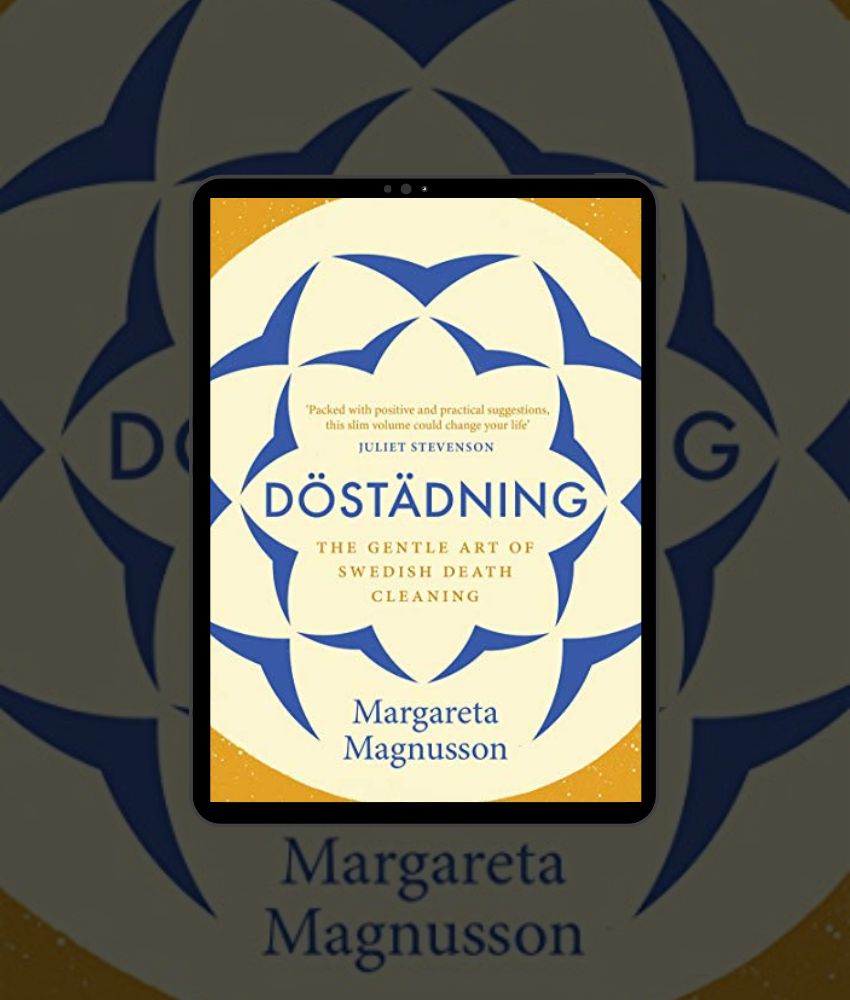
Published 2017 | Self help
A personal review of Margareta Magnusson’s Dostadning, a practical and surprisingly comforting guide to decluttering and letting go.
“A fond and wise little book” is how The New York Times described it, and I would agree.
I stumbled upon this book at a time when I had desperately turned to the internet in search of ways to convince my mother to declutter. She is a habitual hoarder who has preserved everything — from gift boxes that arrived more than 15 years ago to old frying pan sets, photographs, baby clothes and much more.
Then again, considering that I hoard books because “what if there’s an apocalypse and I suddenly have all the time in the world?”, perhaps I should refrain from too much commentary.
The book appeared on one of the many recommendation lists I found online, and I was immediately intrigued by the oddly musical and surprisingly assertive word: Dostadning.
The Crux
Margareta Magnussion’s book isn’t a preachy, morbid book that laments death. Instead, it treats death as a fact of life, which, despite its heartbreaking nature, it is. The author, who writes from her own experience of death cleaning, advocates the idea of taking care of your possessions, to, among other things, ensure that what you value goes to an individual or place that appreciates it and your immediate family or loved ones do not have to bear the burden of sorting through your things after you’ve moved on.
Following the initial introductory chapters, the author has divided the chapters on the basis of the things that form a part of life and have to be dealt with later – artefacts and articles, knick-knacks and photographs, pets, clothing and more. The author downplays the gravity by interspersing her suggestions with instances from her life, with memories attached to her own death cleaning, personal and professional.
To Read or Not to Read
What stands out for me in this particular read is that the tips that she has given are practical enough that they need not be limited to the concept of death cleaning alone. These tips are helpful when you are changing homes, moving to another city or country or downsizing/decluttering, as is evident in the photograph above – note the number of stickers peeping out of the book! I recommend this book for those looking for such practical tips, and have added it to my mother’s bedside pile of books she should read.
I would, however, also add a ‘trigger’ label to this particular book for those who’ve seen death at close quarters – it may bring back memories that aren’t necessarily good, it may remind you of moments of grief that may throw you into despair. That is not the intention of this book in any way, but there is no discounting the unpredictability of the human mind and emotions, so I’d recommend that for those who continue to struggle with the concept of death, take your time with this book, if at all.
P.S. Can be ‘borrowed’ by fellow bibliophiles in Ahmedabad.
